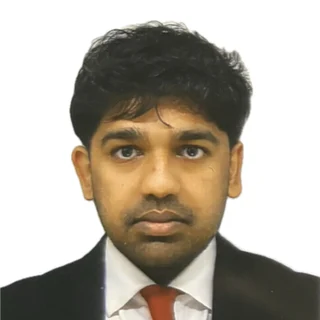
Tinish SubramaniamAI/ML Engineer · On-device AI · Tokyo
All work Flagship project · on-device AI · 2026

Tsunagi繋ぎ · record once, remember everyone, connect everything

We meet a lot and remember little. Tsunagi records a lecture, a meeting or a networking night and turns it into notes, commitments and a map of the people you met. Every model runs on your own machine. It is my argument that AI can be useful without taking your data.
What I builtDesign, ML pipeline, backend, frontend and firmware
Modelsfaster-whisper · Qwen 2.5 (Ollama) · bge-m3
StackPython · FastAPI · Vue 3 · Vite · ESP32
Shown atA student innovation showcase
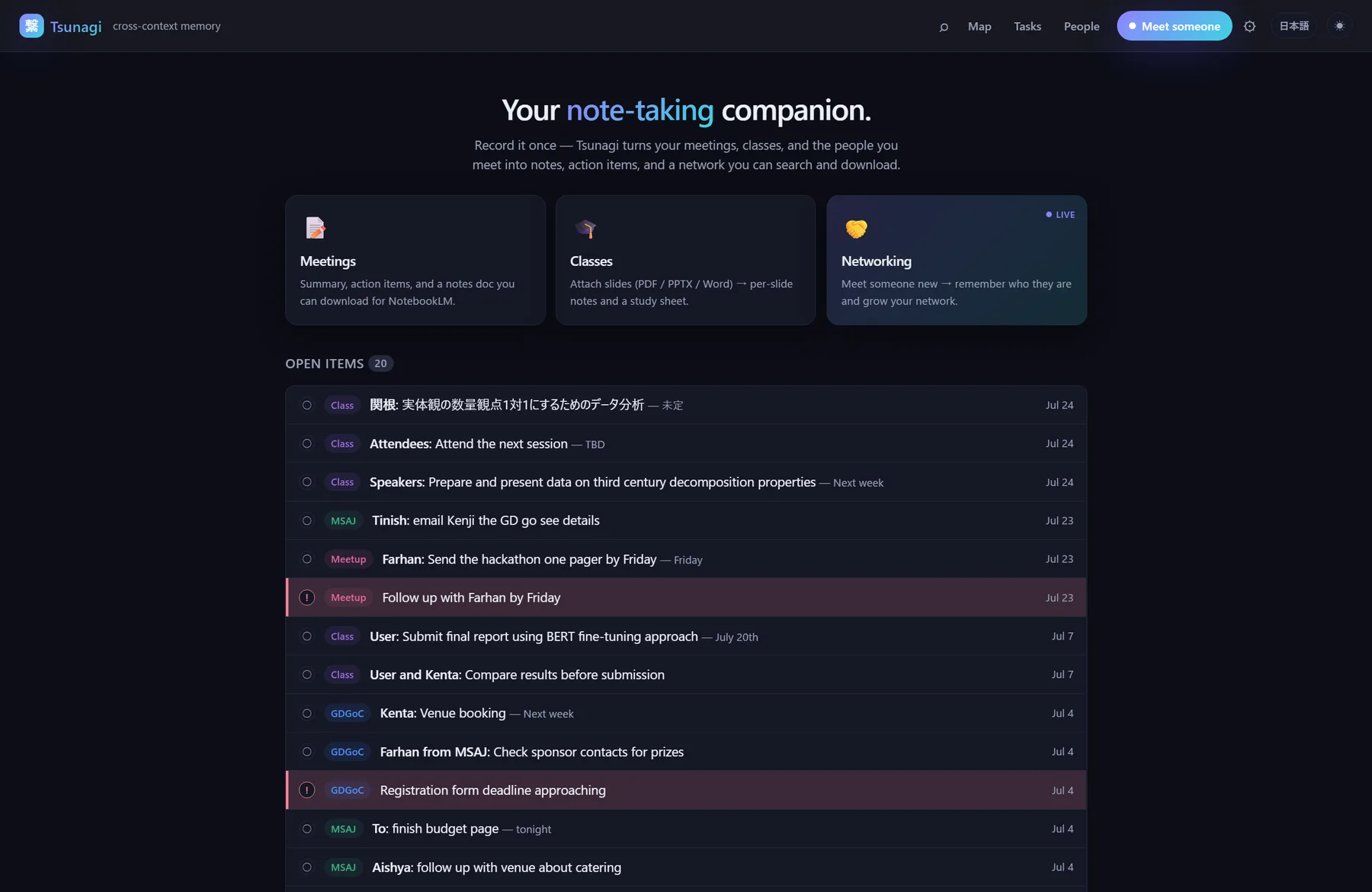
Tsunagi dashboard home screen
≈8sfrom a spoken self-intro to a contact card (fast mode, 6 GB laptop GPU)
0cloud calls once models are downloaded
1.5h+recordings handled with map-reduce, nothing truncated
JP·ENbilingual transcripts and interface
01

Why

A student week is a stream of conversations: lectures, club meetings, networking nights, hackathons. Each is full of names, promises and ideas, and most of it is gone in a day. Taking notes while someone talks to you kills the moment, so nobody does.

Existing tools each solve a slice. Transcription apps hand you a wall of text. Note apps need you to type it all up. Card scanners save the card, not the conversation. The good AI ones live in the cloud. Nothing was built for messy, bilingual, real-life memory that you would actually trust with your own conversations.

02

How it works

captureMic or phone recordingLaptop mic today; ESP32 wearable firmware written and posting to the same upload endpoint.
speechfaster-whisperLocal transcription. Marker-based or automatic slide chunking for lectures.
understandingQwen 2.5 via OllamaTriage: context tag, commitments, urgent flags, and a contact card for each person met.
memorybge-m3 embeddingsCross-context links between sessions, confirmed by a second Qwen pass. Falls back to keywords without it.
alignmentEmbeddings + dynamic programmingNo slide markers? It aligns the transcript to the deck on its own.
surfaceFastAPI + Vue 3Dashboard, people graph, open-items list, CSV vocabulary export, Obsidian sync.
03

Four modes

GeneralSummary, commitments, urgent flags and links to related sessions.
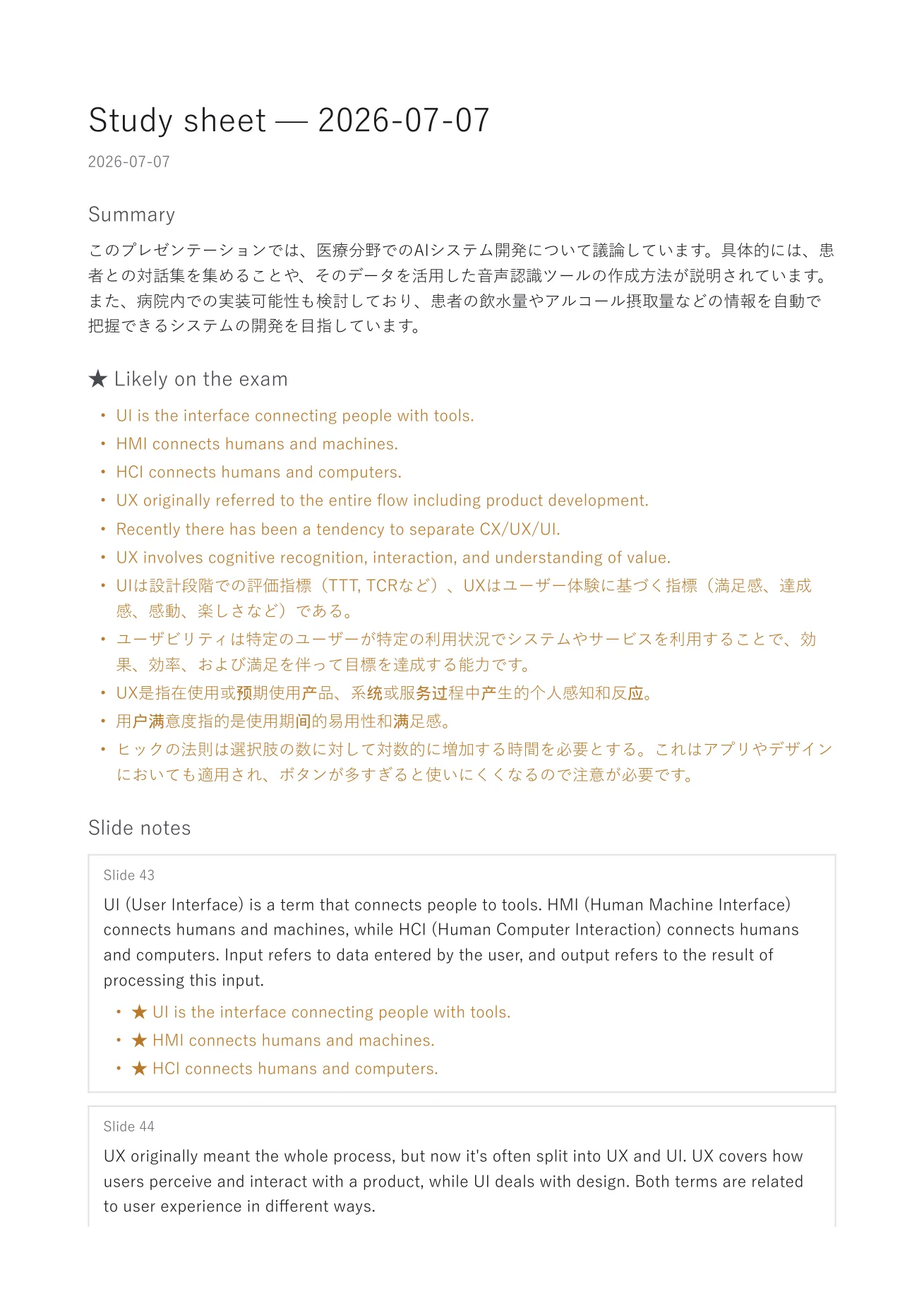
LectureEverything above, plus notes per slide. Attach the PDF and it lines the talk up with the deck.
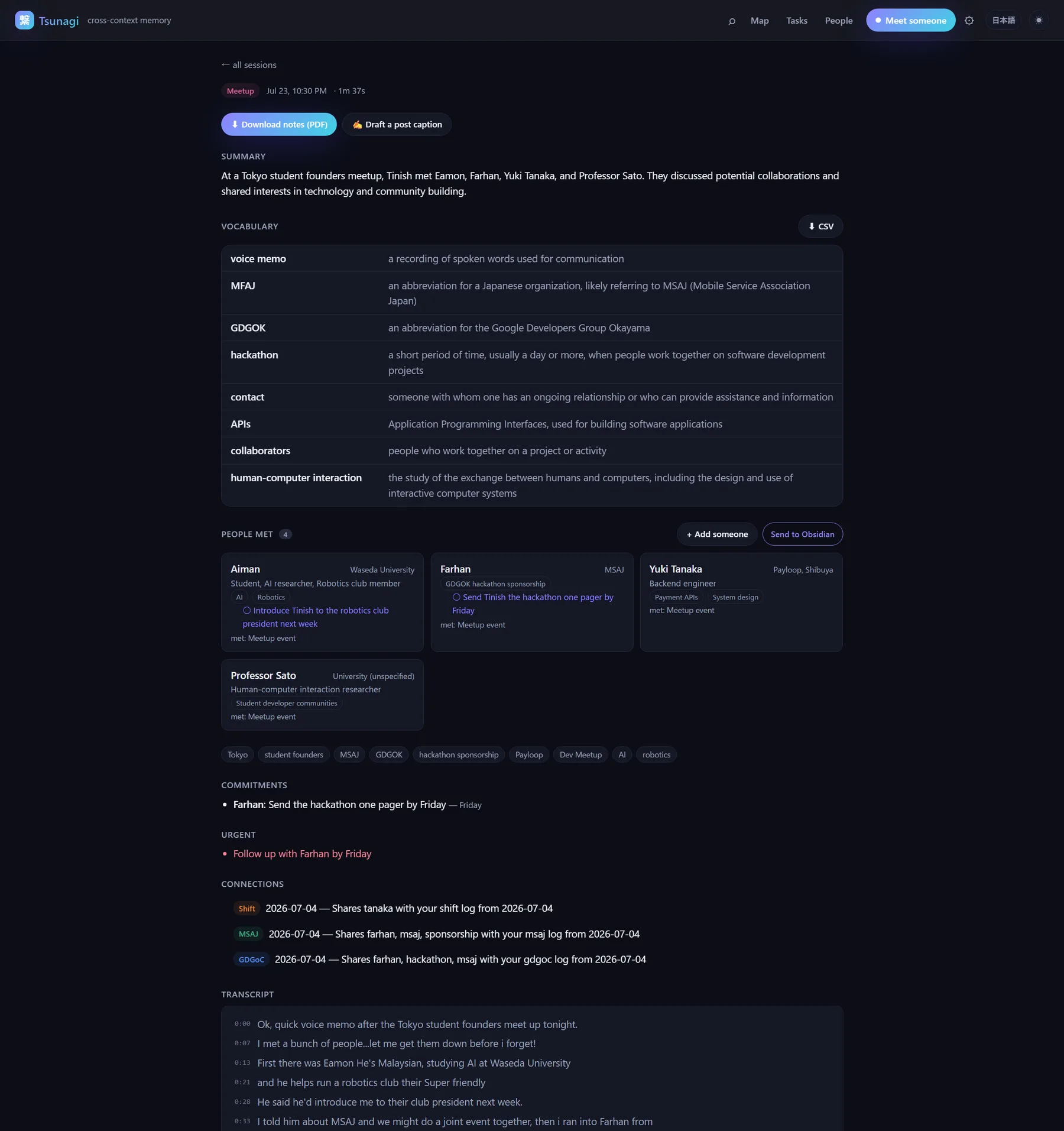
MeetupA contact card for each person: name, organisation, role, interests, how you met, follow-ups. Feeds the people network.
EventFor hackathons and seminars of 1.5 hours or more. The transcript is chunked map-reduce style, so you get talk highlights, the people you met and a vocabulary list.
04

Engineering decisions

Fast enough for a booth. On a small 6 GB laptop GPU, Whisper small and a 3B Qwen model fit in VRAM together. A fast mode skips the heavier cross-context matching, and models are pre-warmed at startup, so each introduction becomes a card in about 8 to 9 seconds.

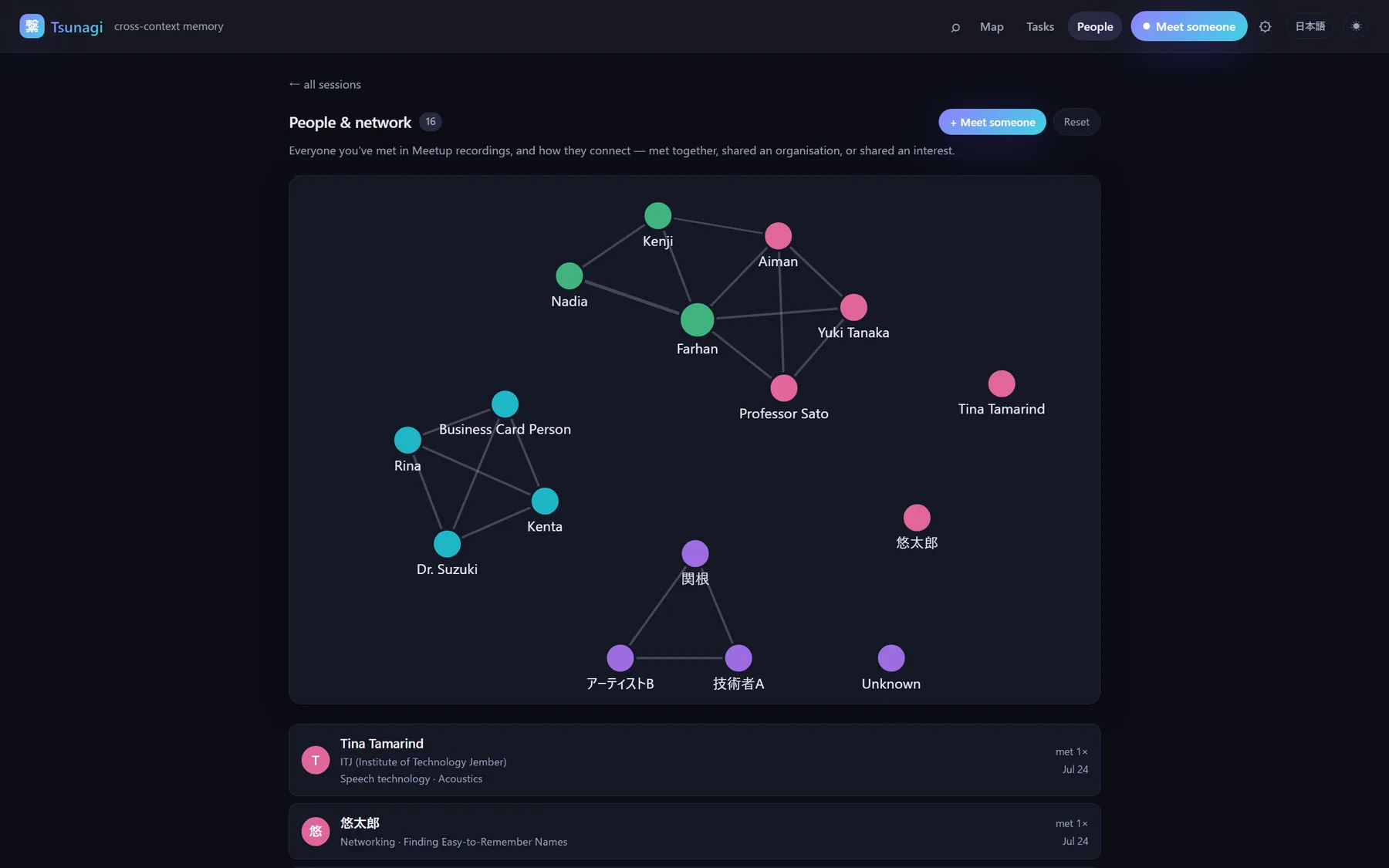
Names are messy. Recordings mishear people, so the people network merges variants across sessions ("Tanaka" folds into "Yuki Tanaka") and lets you tap a name to fix it.

Your notes stay yours. Meetup sessions export to an Obsidian vault as append-only person pages plus a linked meeting note. Captions it drafts are copy-paste only. It never posts anything.

Status, honestly: the hub runs end to end on a laptop today. The ESP32 wearable firmware is written and targets the same endpoint; putting it on hardware is the next step.
05

Screens

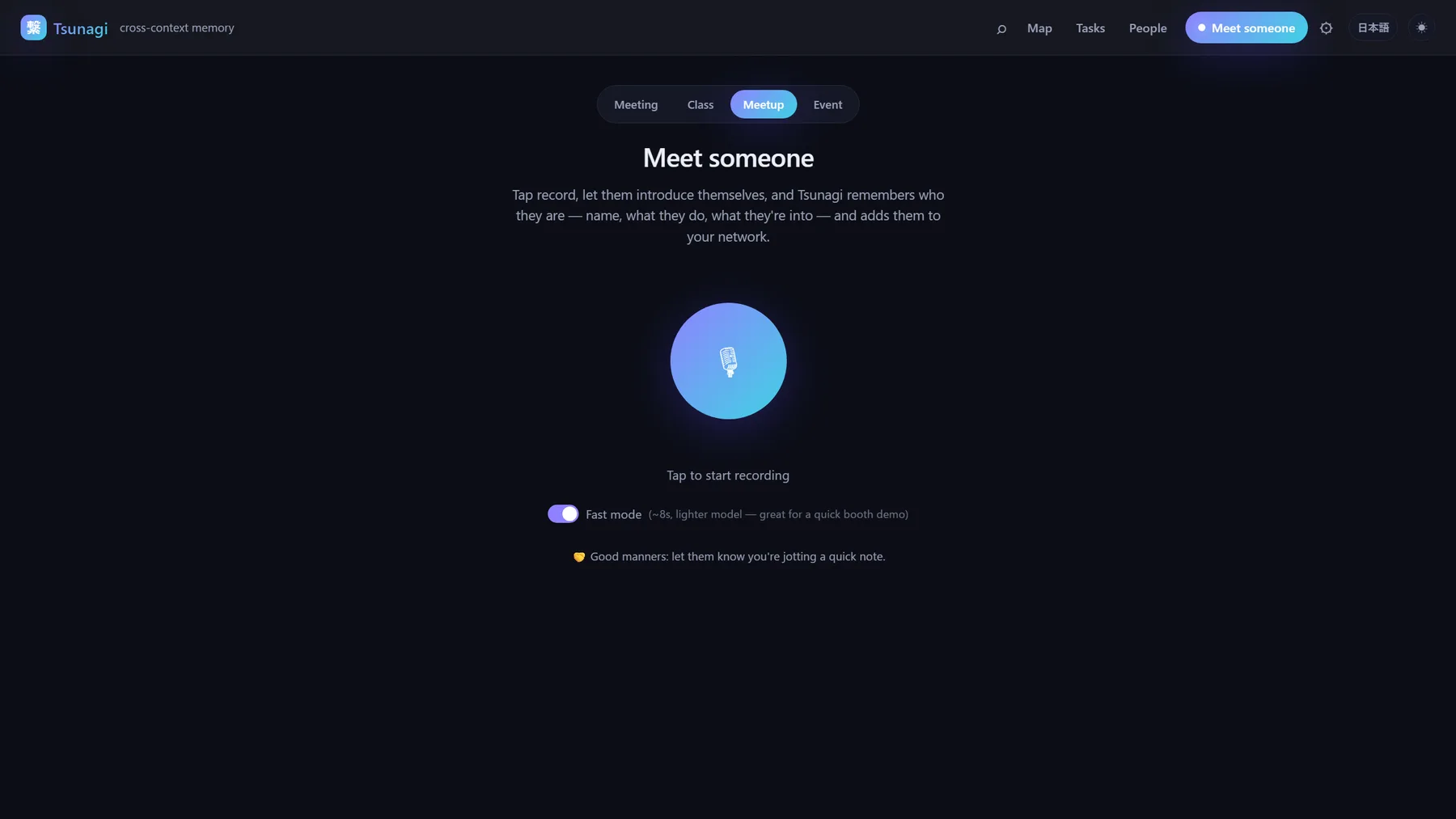
Meet someone screen with a record button and fast mode toggle
Meet someone · one tap to record
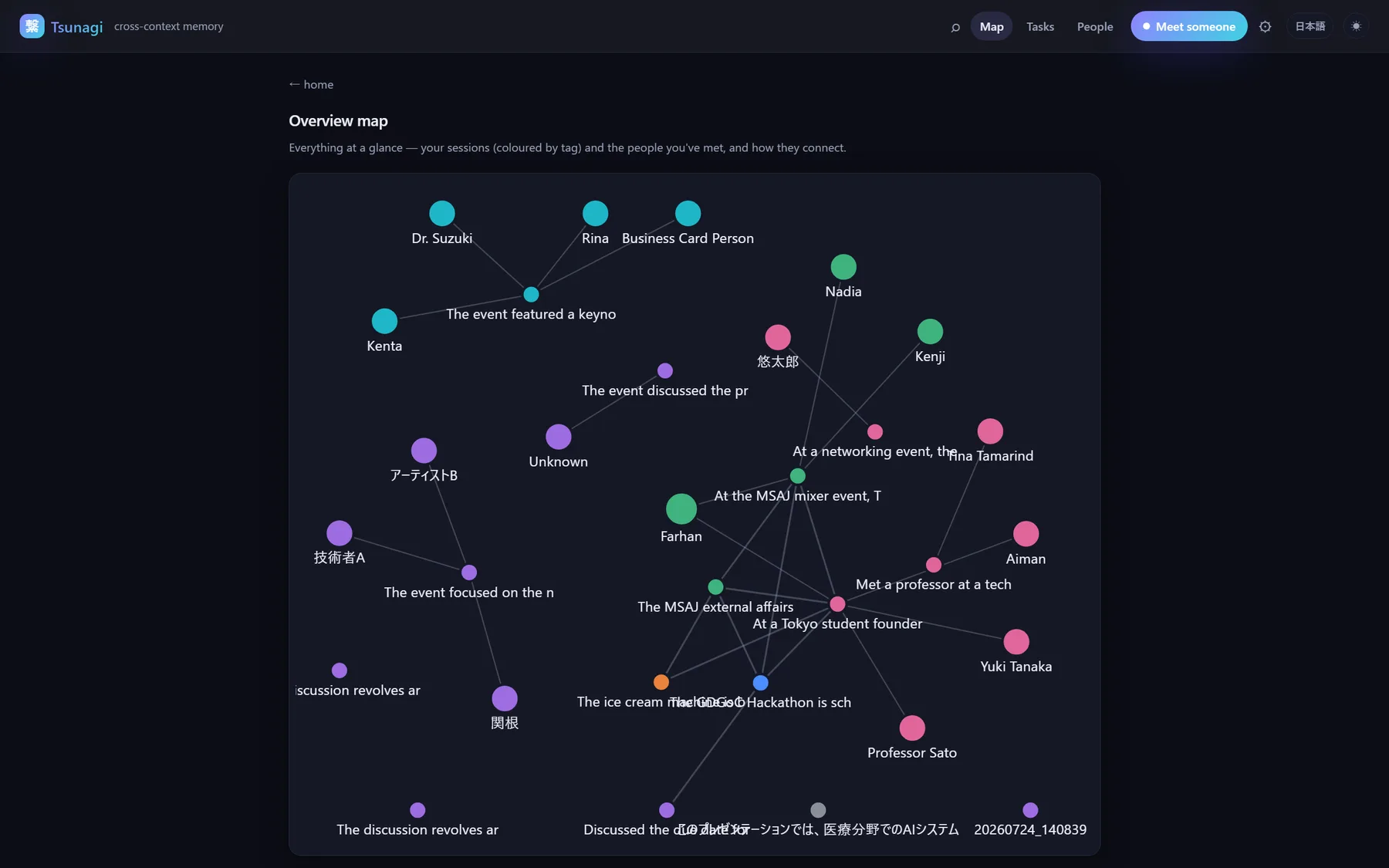
People and network graph
People & network
A meetup session with contact cards
A meetup session
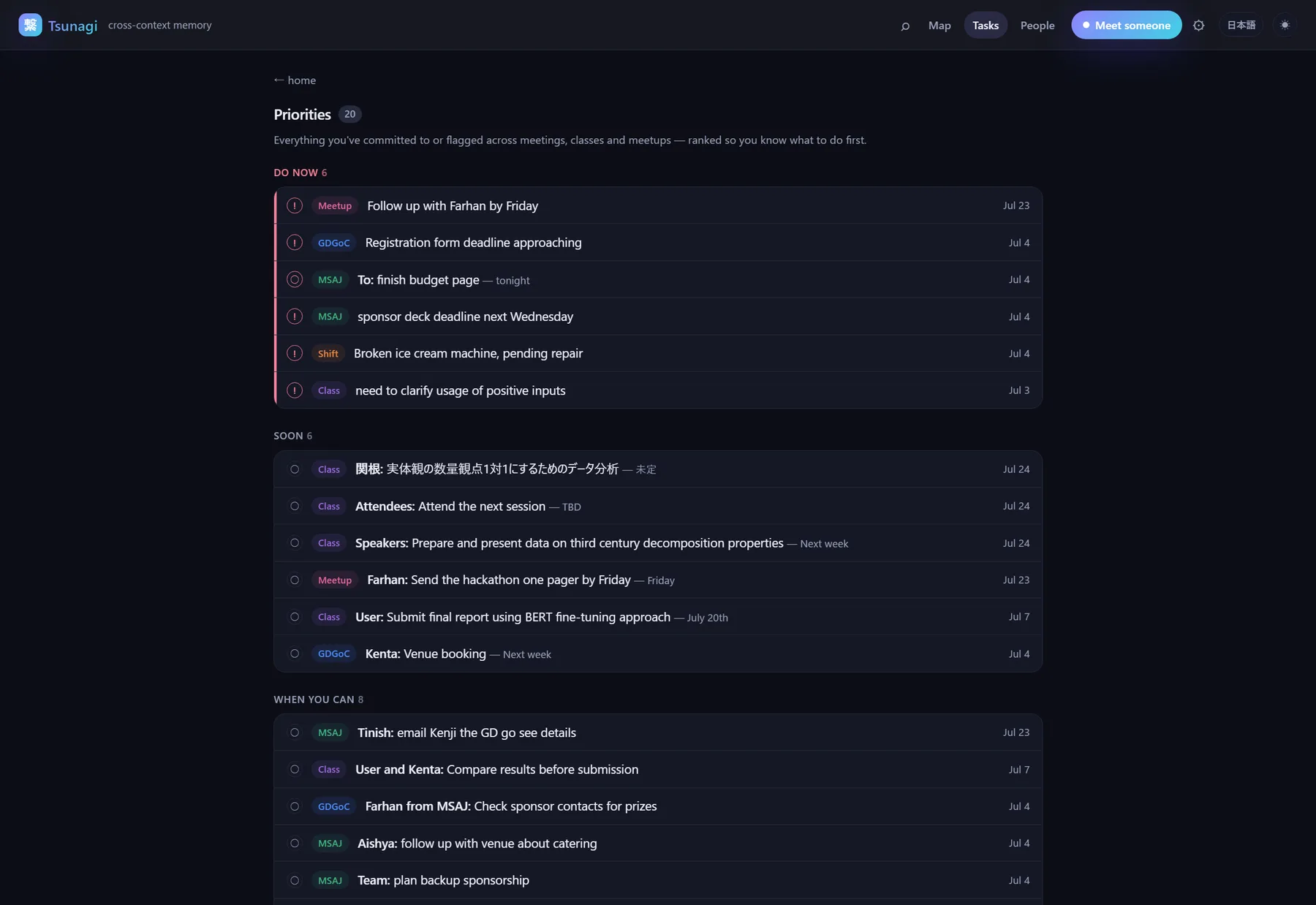
Tasks view listing open commitments
Open items across every context
Overview map of sessions
Overview
Exported lecture study notes
Lecture notes, exported
Next case study
Suma-Getsu
Internships · collaborations · speaking

Let's build
something useful.

tiniissareal@gmail.com